Featured in: Cheap exercise, Swimming vs cycling
Commuting by Bike
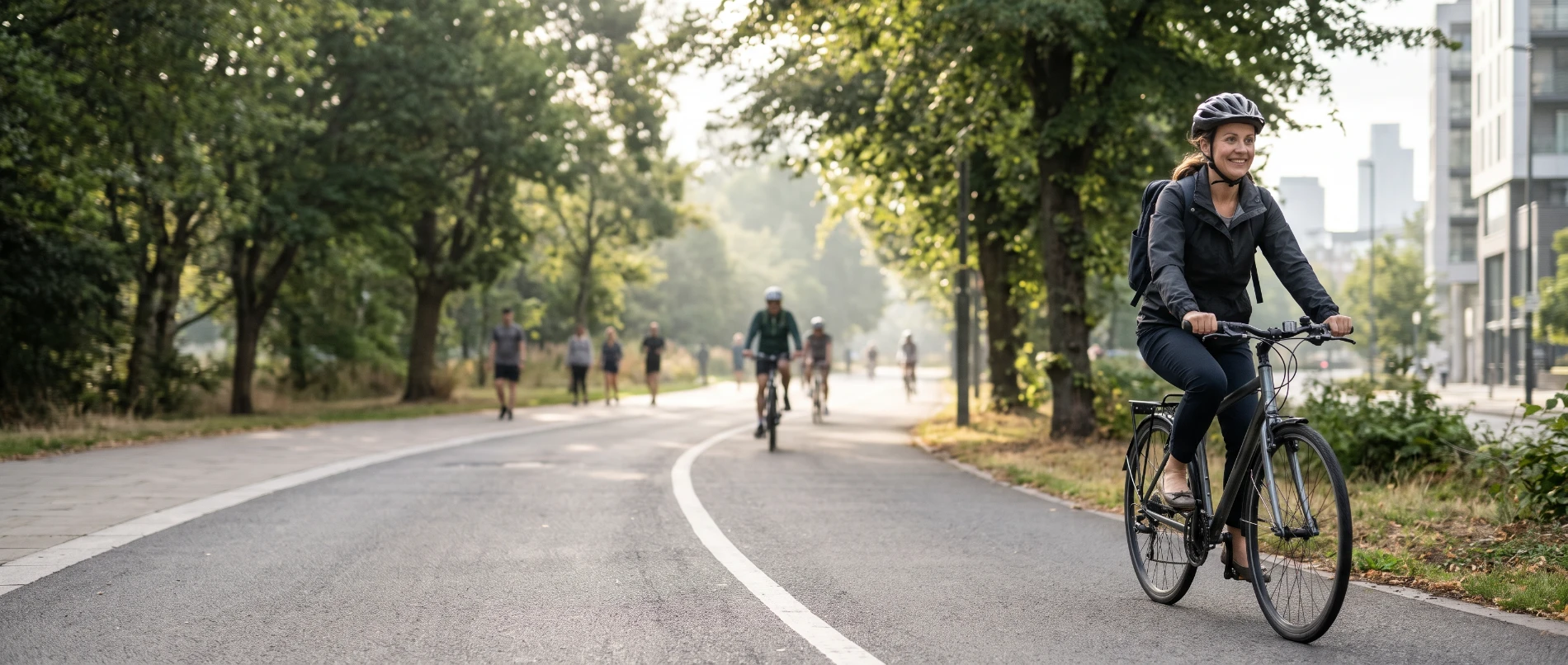
Replace short trips with cycling.
How to start
Pick a quiet, direct route and try it at the weekend first. Start with one or two days a week, leaving a little earlier than usual.
How to progress
Add a day every week or two until you ride most days. Build the distance gradually as your legs and confidence grow.
What the evidence says
Evidence: moderate
In the UK Biobank study of 263,450 adults, people who cycled to work had a 41% lower risk of dying from any cause over about five years than people who commuted by car or public transport (hazard ratio 0.59, range 0.42 to 0.83). It was also linked to lower risk of heart disease and cancer. A wider review of 136 papers found cycling linked to 21% lower all-cause mortality. These are observational studies.
What cycling is linked to
Lower risk compared with not cycling. Bars show the estimate; lines show the 95% range.
Pooled from long-term studies in a review of 136 papers covering 2.6 million adults. These are associations from observational studies, not proof that cycling causes the difference.
Source: Health benefits of different sports review, Sports Medicine - Open, 2024
Take care: Traffic is the main risk. Use quiet roads and cycle paths, wear a helmet if you choose, and use lights and bright clothing.
Sources
12-week starter plan
Build the habit gradually. Test the route first and leave extra time at the start.
Tick each week as you finish it; your ticks are saved on this device only. Repeat a week if it felt hard. Weeks 4, 8 and 12 hold steady so you can settle. This is a general plan, not medical advice.
Add reminders to your calendar
Pick your days and time. You will download a calendar file that adds 12 weeks of reminders to Google, Apple or Outlook calendar.
Calories and weekly minutes
Enter your details for a rough estimate. Based on about 6.8 METs (Cycling to work at a moderate pace (estimated)). Real figures vary by 20% or more between people.
Tips and common mistakes
Tips
- Ride the route at the weekend first to find the calmest way.
- Keep a spare shirt, towel and wipes at work.
- Fit mudguards and lights so you can ride in any weather.
Common mistakes
- Picking the shortest route rather than the safest.
- Heading out in bad weather without waterproofs.
- Skipping basic bike checks like tyres and brakes.
Kit and cost
Low to moderate Approximate UK prices.
- A reliable bike with mudguards and a rack (about £250 to £700, second hand from £100)
- Front and rear lights and a lock (about £40)
- Waterproof jacket and optional helmet
- Cycle to Work scheme can cut the cost in the UK
Frequently asked questions
Is cycling to work good exercise?
Yes. In the UK Biobank study, cycle commuters had a lower risk of death than people who drove or used public transport, though the study cannot prove cause.
How far is too far to commute?
Many people find 3 to 8 miles (5 to 13 km) comfortable. An e-bike makes longer or hillier trips easier.
Do I need special clothes?
No. Ordinary clothes work for short rides. Add a waterproof layer and bright items for safety.
Good for: Heart & fitness Weight loss Mood & stress
Compare with similar options
| Commuting by Bike | E-Bike Riding | Indoor Cycling (Home Trainer) | Road Cycling | |
|---|---|---|---|---|
| Typical session | 30 min × 5/wk | 60 min × 3/wk | 45 min × 3/wk | 90 min × 2/wk |
| Effort | ●●○○○ | ●○○○○ | ●●●○○ | ●●●○○ |
| Cost | Low cost | High cost | Moderate cost | High cost |
| Equipment | Some equipment | Specialist kit | Specialist kit | Specialist kit |
| Impact | Low impact | Low impact | Low impact | Low impact |
| Fitness needed | Any level | Any level | Any level | Some fitness |
| Evidence | moderate | limited | limited | moderate |