ExerciseExplorer
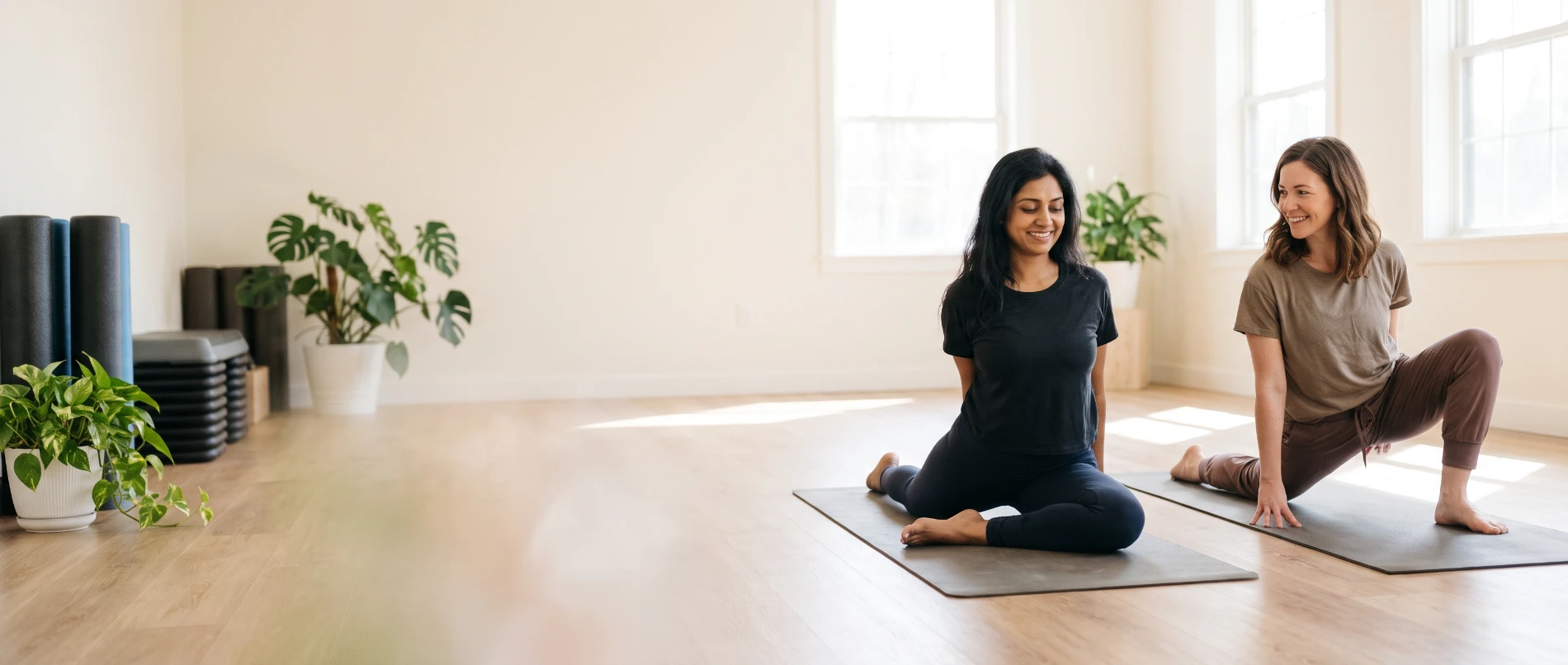
A yoga class and a Pilates class side by side in a bright studio, with smiling participants of mixed ages

Get-fit guides / Yoga vs Pilates

Yoga vs Pilates: which is better?

By the Exercise Explorer team. Last updated 13 November 2026.

Both are low-impact and focus on control, breathing and flexibility. Yoga leans towards flexibility, balance and relaxation, while Pilates puts more emphasis on core strength and precise movement. Research suggests both can help, and neither clearly beats the other.

Read this first. This is general information, not medical advice. If you have a back, joint or pregnancy-related concern, tell the teacher and ask your GP or physiotherapist what is suitable.

The short answer

  • A 2026 pooled analysis of 25 trials found that mind-body exercise (yoga, Pilates, tai chi and qigong) reduced long-term low back pain by about 1.6 points on a 10-point scale, but could not say which type was best (low certainty).
  • A 2026 pooled analysis of 30 trials found that yoga probably lowers blood pressure by about 4.4/2.1 mm Hg in adults with overweight or obesity (moderate-quality evidence).
  • A 2026 pooled analysis found that Pilates reduced pain and improved function in women with long-term low back pain, though the trials were small and varied.
  • The best choice is the one you will do regularly, with a teacher you trust.

Yoga vs Pilates: how they compare

Yoga, Pilates & mind-body

Hatha Yoga

Slow poses with breathing and stillness.
60 min × 2/wkEffort ●●○○○Low cost
Yoga, Pilates & mind-body

Pilates (Mat)

Core-focused precise floor exercises.

50 min × 2/wkEffort ●●○○○Low cost
Yoga, Pilates & mind-body

Chair Yoga

Seated and supported yoga for limited mobility.

30 min × 3/wkEffort ●○○○○Low cost
Yoga, Pilates & mind-body

Yin Yoga

Long passive holds to target connective tissue.

60 min × 2/wkEffort ●○○○○Low cost
Yoga, Pilates & mind-body

Reformer Pilates

Pilates on a spring-resisted machine.

50 min × 2/wkEffort ●●●○○High cost
Mobility, rehab & life stages

Posture and Core Stability

Targeted work to support spine and pelvis.

20 min × 4/wkEffort ●○○○○Free

How each one helps

Evidence at a glance How much good research supports each option

StrongModerateLimited

  1. 1
    Hatha YogaModerate evidence

    Slow poses, stretching and breathing. A good place to start with yoga.

    60 min × 2/wkEffort ●●○○○Low cost
  2. 2
    Pilates (Mat)Moderate evidence

    Core and control work on a mat. A beginner class is the usual start.

    50 min × 2/wkEffort ●●○○○Low cost
  3. 3
    Chair YogaLimited evidence

    A seated option for stiffness or limited mobility.

    30 min × 3/wkEffort ●○○○○Low cost
  4. 4
    Yin YogaLimited evidence

    Long, passive stretches. We found no trials of this style.

    60 min × 2/wkEffort ●○○○○Low cost
  5. 5
    Reformer PilatesLimited evidence

    Pilates on a sprung machine. We found no trials of this format.

    50 min × 2/wkEffort ●●●○○High cost
  6. 6

    Simple core exercises if you want the Pilates benefits at home.

    20 min × 4/wkEffort ●○○○○Free

Find my exercise Browse all

What to avoid or go slowly with

  • Pushing into poses or movements that pinch or hurt. Neither practice should be painful.
  • Advanced classes before you have the basics.
  • Hot or very vigorous styles if you are new or pregnant.
  • Holding your breath. Both practices rely on steady breathing.
  • Expecting either to replace aerobic activity. Add walking or cycling.

When to see a doctor

Stop exercising and get medical advice if any of these apply to you.

Get urgent help now

  • Chest pain, severe breathlessness, or fainting
  • Numbness or weakness spreading in both legs, or loss of bladder or bowel control

Call 999 or go to A&E. Do not wait for a GP appointment.

Speak to a GP or call NHS 111 if you have

  • Back or joint pain that gets worse with practice.
  • Dizziness, particularly when moving between positions.
  • A diagnosed spinal condition, osteoporosis or pregnancy, and you are unsure what is suitable.

What the research says

A 2026 pooled analysis of 25 trials in adults with long-term low back pain found that mind-body exercise (yoga, Pilates, tai chi and qigong) cut pain by about 1.6 points on a 10-point scale compared with usual care or no exercise. The results varied a lot between trials, the certainty was low, and the review could not say which type was best.

A 2026 pooled analysis of Pilates in women with long-term low back pain found less pain and better function, in both menopausal and non-menopausal women. The included trials were small and the results varied.

A 2026 pooled analysis of 30 trials (2,689 adults with overweight or obesity) found that yoga probably lowers blood pressure by about 4.4/2.1 mm Hg (moderate-quality evidence), with only small effects on cholesterol.

We found no trials we had read in full that compare yoga with Pilates directly.

Full references are listed under Sources below. Evidence ratings are our own plain-English summary of the research we found, not a medical opinion.

Frequently asked questions

What is the difference between yoga and Pilates?

Yoga has roots in Indian practice and combines poses, breathing and relaxation. Pilates was developed in the 20th century and emphasises core strength, posture and controlled movement.

Which is better for back pain?

A 2026 pooled analysis found mind-body exercise, including both, reduced pain, but could not say which type was best. Choose the one you enjoy, and tell the teacher about your back.

Which is better for weight loss?

Neither is a high-calorie-burning activity. They help with fitness and consistency, but weight depends mostly on diet and overall activity.

Which is better for flexibility?

Yoga tends to emphasise flexibility more, but both improve mobility. We did not find trials we had read in full that compare them directly.

Which is better for core strength?

Pilates focuses more on the core, but many yoga classes work it too.

Can I do both?

Yes. Many people do, and they complement each other.

When should I see a doctor?

See a GP if practice makes pain worse, or if you have a spinal condition, osteoporosis or are pregnant and unsure what is suitable. Get urgent help for chest pain or severe breathlessness.

Sources

  1. Effects of Mind-Body Exercises on Pain Intensity in Individuals with Chronic Nonspecific Low Back Pain: A Systematic Review and Network Meta-Analysis of Randomized Controlled Trials. Journal of Pain Research, 2026. doi.org/10.2147/jpr.s650628
  2. Efficacy of Pilates on chronic low back pain in women: A systematic review and meta-analysis. Journal of Back and Musculoskeletal Rehabilitation, 2026. doi.org/10.1177/10538127261483829
  3. Impact of yoga on cardiometabolic health in adults with overweight or obesity: A systematic review and meta-analysis of randomized controlled trials. PLOS Global Public Health, 2026. doi.org/10.1371/journal.pgph.0006174

Related guides