By the Exercise Explorer team. Last updated 13 November 2026.
Low-impact exercise keeps at least one foot on the ground or takes your weight off your joints, so it is gentler on knees, hips and backs. It can still build fitness and strength. These are the options we rate well.
Read this first. This is general information, not medical advice. If you have joint, heart or other health problems, ask your GP or physiotherapist what is suitable.
The short answer
Low impact does not mean low benefit. Walking, swimming, cycling and water exercise all count towards the guideline of 150 to 300 minutes of moderate activity a week.
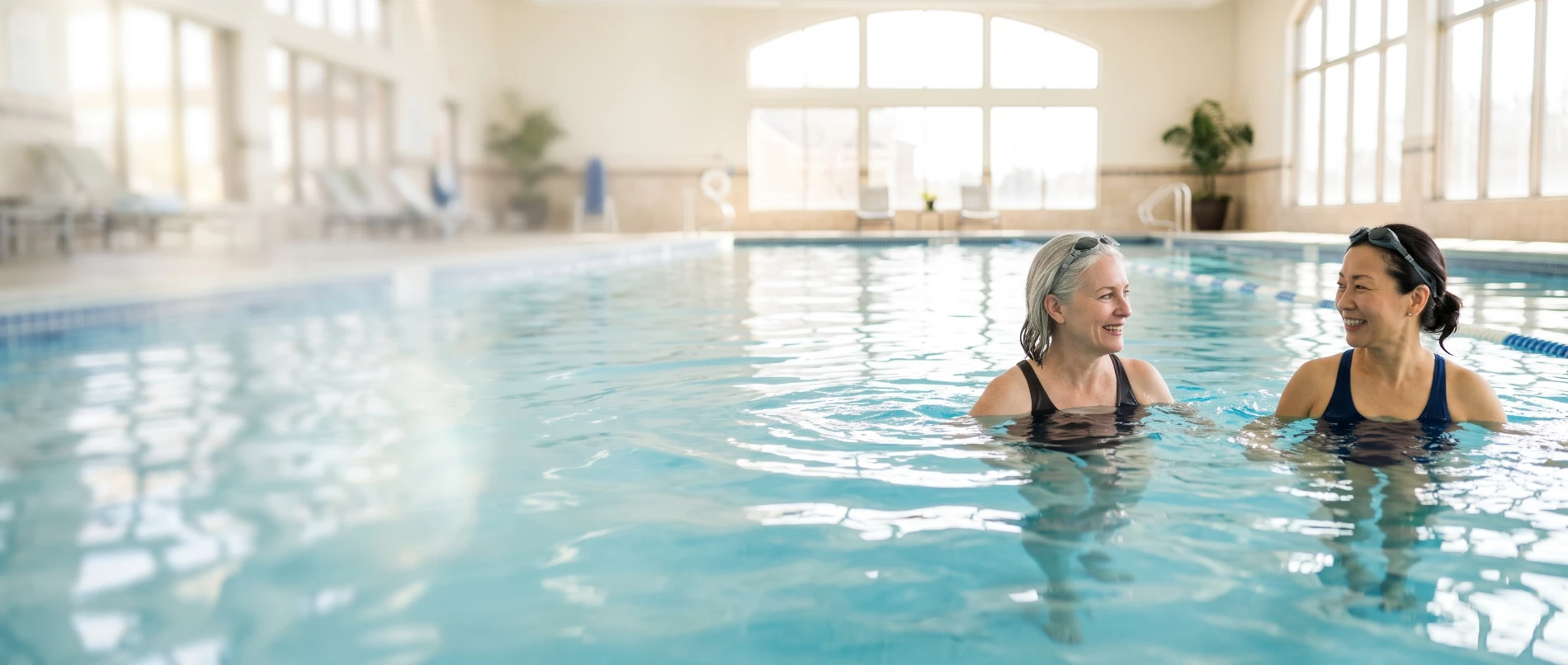
Water exercise unloads the joints. A 2026 pooled analysis found small improvements in pain and function in people with knee or hip osteoarthritis (low certainty).
Add strength work, because muscle supports the joints.
Low impact can still be hard. Raise the effort gradually.
Overdoing it on good days. Increase in small steps.
Pushing through sharp pain.
Wet pool-side floors. Wear grippy shoes and take care getting in and out.
A gentle first week of low-impact exercise
This is an example to adapt, not a prescription. If a day feels too much, do less.
Day1A 10-minute walk.
Day210 minutes of light band strength work.
Day315 minutes on a stationary bike, or water walking.
Day4Rest or gentle stretching.
Day5A 15-minute walk with a few slightly faster minutes.
Day6A gentle swim, or a class such as tai chi.
Day7Rest. If the week felt fine, add a few minutes next week.
My notes: how did your joints feel the next day?
When to see a doctor
Stop exercising and get medical advice if any of these apply to you.
Get urgent help now
Chest pain or tightness
Severe breathlessness, or fainting
Call 999 or go to A&E. Do not wait for a GP appointment.
Speak to a GP or call NHS 111 if you have
Joint pain or swelling that is new, getting worse or has not settled.
Dizziness or palpitations during exercise.
A joint that locks or gives way.
What the research says
The WHO 2020 guidelines recommend 150 to 300 minutes of moderate aerobic activity a week plus muscle-strengthening on at least two days. They do not specify impact level, so low-impact activities count.
A 2026 pooled analysis of 12 randomised trials (1,057 people with overweight or obesity and knee or hip osteoarthritis) found that aquatic exercise gave small improvements in pain and physical function. The certainty of the evidence was low.
A 2022 pooled analysis of cohort studies linked muscle-strengthening activity to lower risk of death and long-term conditions. This is observational.
We found no trials that compare low-impact with high-impact exercise for fitness that we had read in full.
Full references are listed under Sources below. Evidence ratings are our own plain-English summary of the research we found, not a medical opinion.
Frequently asked questions
What is low-impact exercise?
Exercise that does not involve jumping or hard landings, such as walking, swimming, cycling, water exercise and tai chi.
Is low-impact exercise effective?
It can be. The guidelines count any moderate activity toward the weekly total, and you can raise the effort by going further, faster or adding resistance.
Can I lose weight with low-impact exercise?
It uses energy like any other activity, but weight depends mostly on diet and overall activity. Low-impact options can be easier to keep up.
What are the best low-impact cardio options?
Walking, cycling, swimming, water aerobics and the elliptical trainer are common choices.
Is low-impact exercise good for bad knees?
Often, yes. Water exercise showed small improvements in people with knee or hip osteoarthritis, with low certainty. See the bad knees guide for more.
Do I still need strength work?
Yes. The guidelines recommend muscle-strengthening on at least two days a week.
When should I see a doctor?
Get urgent help for chest pain, severe breathlessness or fainting. See a GP for new or worsening joint pain, dizziness or palpitations.
Sources
World Health Organization 2020 guidelines on physical activity and sedentary behaviour. British Journal of Sports Medicine, 2020. doi.org/10.1136/bjsports-2020-102955
Effects of aquatic exercise on pain and physical function in overweight/obese patients with lower limb osteoarthritis: a systematic review and meta-analysis. Frontiers in Physiology, 2026. doi.org/10.3389/fphys.2026.1864401
Muscle-strengthening activities are associated with lower risk and mortality in major non-communicable diseases: a systematic review and meta-analysis of cohort studies. British Journal of Sports Medicine, 2022. doi.org/10.1136/bjsports-2021-105061