ExerciseExplorer
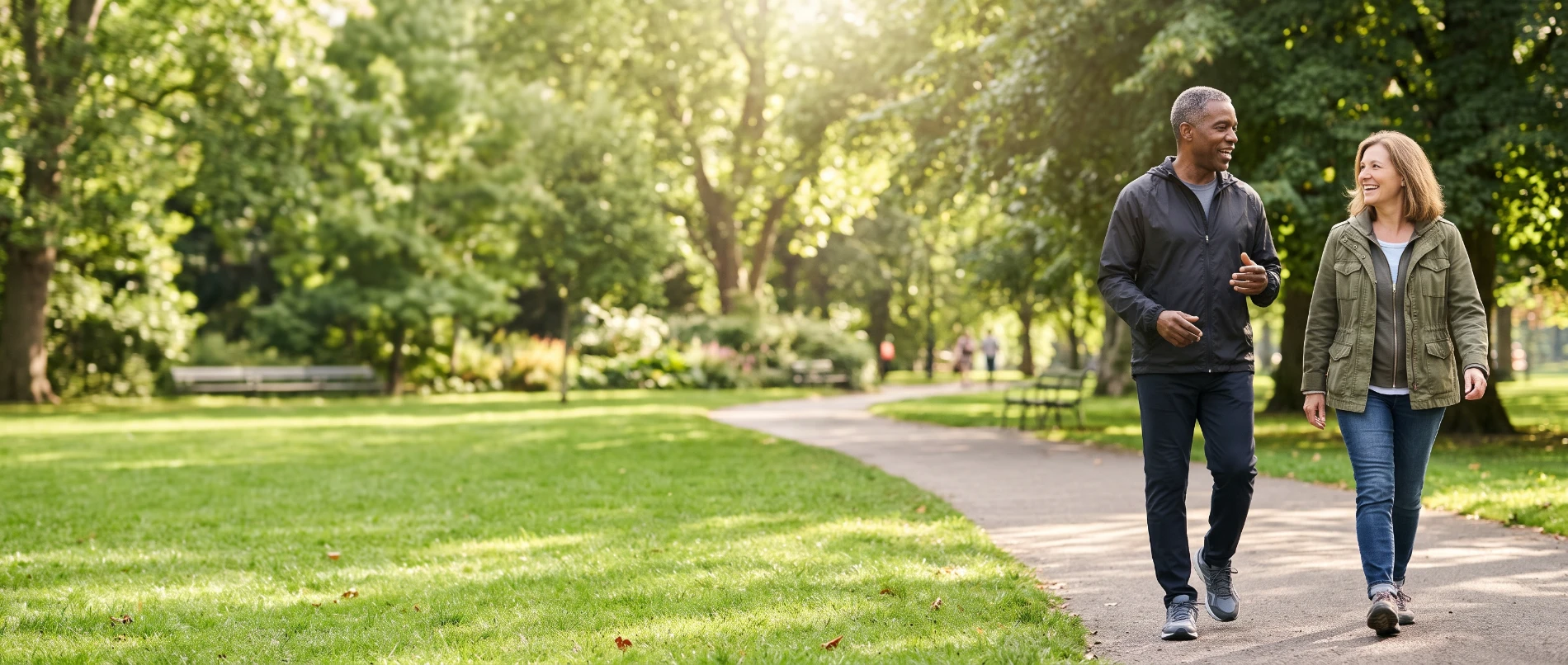
A smiling older man and woman walking briskly along a tree-lined park path

Get-fit guides / Exercise with high blood pressure

Exercise with high blood pressure

By the Exercise Explorer team. Last updated 13 November 2026.

Regular exercise is one of the standard lifestyle recommendations for high blood pressure. A large 2023 review found that several types of exercise lowered resting blood pressure on average. These are the options we rate best, and how to start safely.

Read this first. If you have high blood pressure, especially if it is very high, untreated or you take medicines for it, check with your GP before starting something new. This is general information, not medical advice.

The short answer

  • A 2023 review of 270 trials found that aerobic exercise lowered resting blood pressure by about 4.5/2.5 mm Hg on average. Effects vary from person to person.
  • Walking, cycling, swimming and water exercise are all gentle ways to build up.
  • Strength and isometric (static hold) exercise also showed benefits, but keep effort moderate and breathe normally.
  • Avoid heavy straining or holding your breath. Stop if you feel dizzy, get chest pain or become very breathless.

The best exercises for high blood pressure

Walking

Daily Walking

Steady walks built into the day; the easiest place to start.
30 min × 5/wkEffort ●○○○○Free
Swimming & water

Aqua Aerobics

Group exercise to music in a pool.

45 min × 2/wkEffort ●●○○○Low cost
Swimming & water

Lap Swimming

Pool lengths using one or more strokes.

40 min × 3/wkEffort ●●●○○Low cost
Yoga, Pilates & mind-body

Hatha Yoga

Slow poses with breathing and stillness.

60 min × 2/wkEffort ●●○○○Low cost
Yoga, Pilates & mind-body

Tai Chi

Slow, flowing movements for balance and calm.

45 min × 3/wkEffort ●○○○○Low cost
Strength & resistance

Isometric Holds

Static holds such as wall sits and planks.

15 min × 4/wkEffort ●●○○○Free
Strength & resistance

Resistance Band Training

Full-body workouts with elastic bands.

30 min × 3/wkEffort ●●○○○Low cost
Gym machines & classes

Stationary Bike

Seated cycling at the gym or at home.

30 min × 3/wkEffort ●●○○○Low cost

How each one helps

Evidence at a glance How much good research supports each option

StrongModerateLimited

  1. 1
    Daily WalkingStrong evidence

    The easiest place to start. Brisk walking on most days is a standard recommendation.

    30 min × 5/wkEffort ●○○○○Free
  2. 2
    Hill Walking and HikingModerate evidence

    Outdoor walking groups were linked to lower blood pressure in a pooled analysis of 42 studies (2015). Start with gentle slopes.

    90 min × 1/wkEffort ●●●○○Low cost
  3. 3
    Aqua AerobicsModerate evidence

    Water exercise lowered blood pressure in older people with hypertension in a 2026 pooled analysis.

    45 min × 2/wkEffort ●●○○○Low cost
  4. 4
    Lap SwimmingModerate evidence

    Gentle, whole-body exercise with no impact.

    40 min × 3/wkEffort ●●●○○Low cost
  5. 5
    Hatha YogaModerate evidence

    A 2026 pooled analysis of 30 trials found yoga probably lowers blood pressure a little. Avoid straining or holding your breath.

    60 min × 2/wkEffort ●●○○○Low cost
  6. 6
    Tai ChiModerate evidence

    Slow, low-effort movement with a low injury risk.

    45 min × 3/wkEffort ●○○○○Low cost
  7. 7
    Isometric HoldsModerate evidence

    Static holds, such as wall sits, showed large effects in the 2023 review, but start light and never hold your breath.

    15 min × 4/wkEffort ●●○○○Free
  8. 8
    Resistance Band TrainingModerate evidence

    Light resistance for strength. Use steady breathing and avoid very heavy effort.

    30 min × 3/wkEffort ●●○○○Low cost
  9. 9
    Stationary BikeLimited evidence

    Smooth and easy to control. Keep the effort moderate and increase slowly.

    30 min × 3/wkEffort ●●○○○Low cost

Find my exercise Browse all

What to avoid or go slowly with

  • Holding your breath or straining hard, for example with very heavy lifts, which can spike blood pressure.
  • Going from sitting to very hard effort without a warm-up.
  • Exercising when you feel unwell, or when your readings are far above what your clinician has said is safe.
  • Very intense efforts unless your doctor has said it is suitable, especially if you have other heart risk factors.
  • Stopping your medicines because you are exercising. Changes to medicines should only be made with your clinician.

How to start exercising with high blood pressure: a gentle first week

This is an example to adapt, not a prescription. If a day feels too much, do less.

  1. Day1A 10-minute easy walk.Walking
  2. Day210 minutes of gentle stretching or chair yoga.Yoga and floor exercises
  3. Day3A 15-minute walk at a pace where you can still talk.Walking
  4. Day4Rest.Rest day
  1. Day510 to 15 minutes on a stationary bike, or water walking.Swimming or water walking
  2. Day6A 15 to 20-minute walk.Walking
  3. Day7Rest. If the week felt fine, add a few minutes next week.Rest day
  4. My notes: how did you feel after, and any readings you took?

When to see a doctor

Stop exercising and get medical advice if any of these apply to you.

Get urgent help now

  • Chest pain or tightness
  • Sudden severe headache, confusion, or weakness on one side of the face or body
  • Severe breathlessness or fainting

Call 999 or go to A&E. Do not wait for a GP appointment.

Speak to a GP or call NHS 111 if you have

  • Dizziness or lightheadedness during or after exercise.
  • Unusual breathlessness, palpitations or a racing heart.
  • Home readings that are consistently very high.
  • Swollen ankles or new leg swelling.

What the research says

A 2023 review of 270 randomised trials (15,827 people) found that exercise training lowered resting blood pressure, with aerobic training lowering it by about 4.5/2.5 mm Hg. The authors noted that isometric exercise had particularly large effects.

A 2026 pooled analysis of 30 trials (2,689 adults with overweight or obesity) found that yoga probably lowers blood pressure by about 4.4/2.1 mm Hg (moderate-quality evidence).

A 2026 pooled analysis looked at aquatic exercise in older people with high blood pressure.

These are averages across groups. They do not predict what will happen for you, and exercise is a complement to, not a replacement for, advice and treatment from your clinician.

Full references are listed under Sources below. Evidence ratings are our own plain-English summary of the research we found, not a medical opinion.

Frequently asked questions

What exercise is best for high blood pressure?

Aerobic activity such as brisk walking, cycling and swimming has the most evidence, and strength and isometric work also showed benefits. The best option is one you can do regularly.

Is walking good for high blood pressure?

Yes, it is one of the most widely recommended options. A pooled analysis of walking groups found lower blood pressure on average.

How much can exercise lower blood pressure?

In a large 2023 review, aerobic exercise lowered resting blood pressure by about 4.5/2.5 mm Hg on average. Individual results vary.

Is lifting weights safe with high blood pressure?

Light to moderate strength work with steady breathing is usually considered fine, but heavy lifting and straining can spike blood pressure. Check with your GP if your blood pressure is high or poorly controlled.

Can I exercise if I take blood pressure tablets?

Usually yes, but some medicines can cause dizziness or change your heart rate response. Ask your GP or pharmacist.

Should I check my blood pressure before exercising?

If your clinician has asked you to monitor at home, follow their advice about when not to exercise. Otherwise, do not start if you feel unwell.

When should I see a doctor?

Get urgent help for chest pain, severe breathlessness or sudden weakness. See a GP for dizziness, palpitations or very high home readings.

Sources

  1. Exercise training and resting blood pressure: a large-scale pairwise and network meta-analysis of randomised controlled trials. British Journal of Sports Medicine, 2023. doi.org/10.1136/bjsports-2022-106503
  2. The effects of aquatic exercise therapy on blood pressure in elderly people with hypertension: a systematic review and meta-analysis. Frontiers in Cardiovascular Medicine, 2026. doi.org/10.3389/fcvm.2026.1951070
  3. Impact of yoga on cardiometabolic health in adults with overweight or obesity: A systematic review and meta-analysis of randomized controlled trials. PLOS Global Public Health, 2026. doi.org/10.1371/journal.pgph.0006174

Related guides