ExerciseExplorer
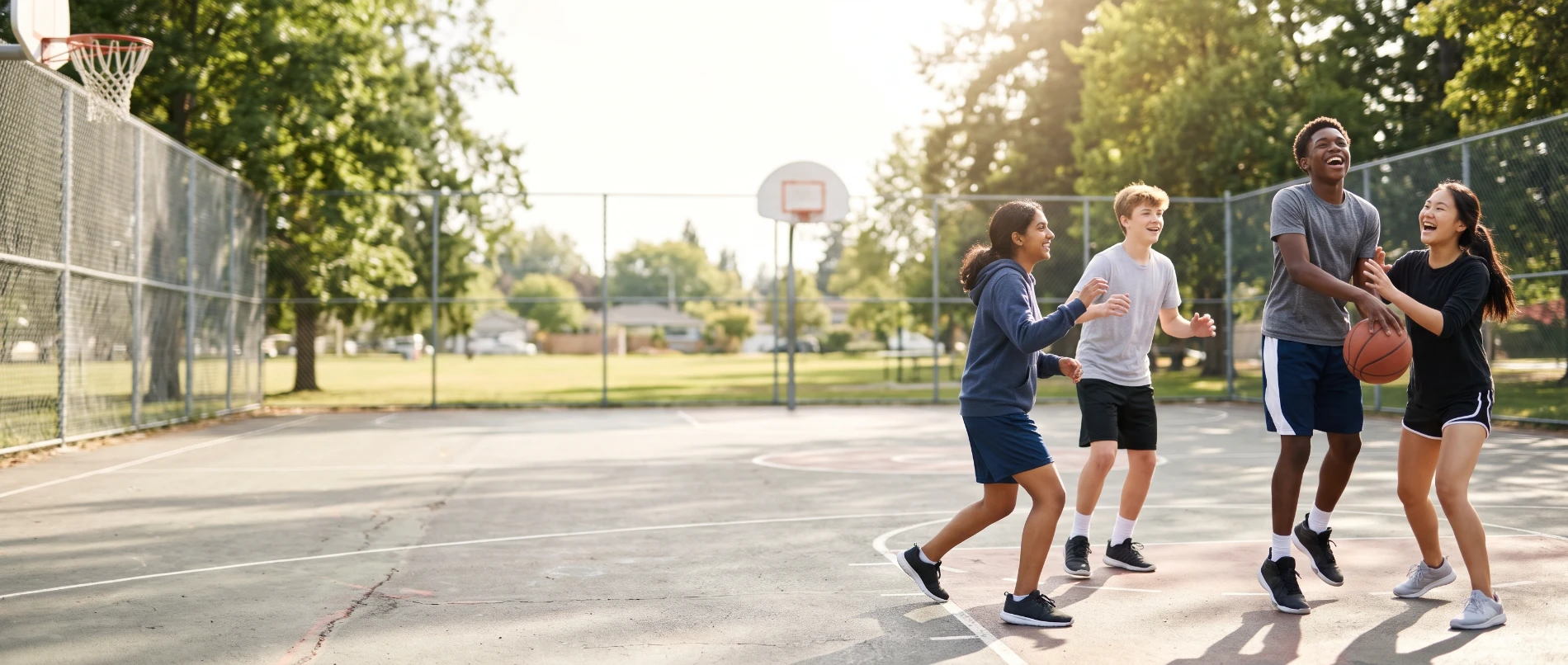
A group of smiling teenagers of mixed backgrounds playing a ball game together outdoors

Get-fit guides / Exercise for teenagers

Exercise for teenagers

By the Exercise Explorer team. Last updated 13 November 2026.

The WHO recommends an average of 60 minutes a day of moderate to vigorous activity for 5 to 17 year olds, including activities that strengthen muscles and bones on at least three days a week. The best activity is the one a teenager enjoys.

Read this first. This is general information, not medical advice. If a teenager has a health condition, or you are worried about their weight, fitness or mood, speak to your GP or school nurse.

The short answer

  • The WHO suggests an average of 60 minutes a day of moderate to vigorous activity, with muscle- and bone-strengthening activity on at least three days a week.
  • It can be varied: sport, walking or cycling to school, dancing and active play all count.
  • A 2026 review raised concerns about injury and wellbeing when young people specialise in one sport year-round.
  • Choice and fun matter more than a perfect plan.

The best ways for teenagers to stay active

Strength & resistance

Bodyweight Calisthenics

Push-ups, squats, pull-ups and dips using body weight.
40 min × 3/wkEffort ●●●○○Free
Swimming & water

Lap Swimming

Pool lengths using one or more strokes.

40 min × 3/wkEffort ●●●○○Low cost
Family & kids

Youth Sports Clubs

Club-based football, hockey, swimming and more.

60 min × 2/wkEffort ●●●○○Low cost
Everyday movement

Active Commuting

Walking or cycling for the journey to work.

30 min × 5/wkEffort ●●○○○Free
Family & kids

Family Bike Rides

Weekend rides for all ages.

90 min × 1/wkEffort ●●○○○Low cost
Dance

Hip-Hop Dance

Street dance styles, classes or at home.

60 min × 2/wkEffort ●●●○○Low cost
Running & athletics

parkrun

Free weekly timed 5 km run or walk in local parks.

40 min × 1/wkEffort ●●●○○Free

How each one helps

Evidence at a glance How much good research supports each option

StrongModerateLimited

  1. 1
    Bodyweight CalisthenicsModerate evidence

    Basic strength work with no kit.

    40 min × 3/wkEffort ●●●○○Free
  2. 2
    Lap SwimmingModerate evidence

    A life skill and whole-body exercise.

    40 min × 3/wkEffort ●●●○○Low cost
  3. 3
    Youth Sports ClubsLimited evidence

    Team sport brings skills and friendships. Try several rather than one.

    60 min × 2/wkEffort ●●●○○Low cost
  4. 4
    Active CommutingLimited evidence

    Walking, scooting or cycling to school adds daily activity.

    30 min × 5/wkEffort ●●○○○Free
  5. 5
    Family Bike RidesLimited evidence

    Shared activity with family.

    90 min × 1/wkEffort ●●○○○Low cost
  6. 6
    Hip-Hop DanceLimited evidence

    A fun way to be active, for those who prefer dance to sport.

    60 min × 2/wkEffort ●●●○○Low cost
  7. 7

    Builds strength and problem-solving. Use a supervised wall.

    90 min × 2/wkEffort ●●●●○Moderate cost
  8. 8
    parkrunLimited evidence

    Free weekly 5k events, with a junior version for ages 4 to 14. Walking is fine.

    40 min × 1/wkEffort ●●●○○Free

Find my exercise Browse all

What to watch out for

  • Specialising in one sport all year too early.
  • Focusing on weight or appearance rather than fun and health.
  • Heavy lifting without a qualified coach and good form.
  • Overtraining or playing through injuries.
  • Using exercise to punish or restrict. Raise concerns about eating or body image with a GP.

A week of activity for teenagers

This is an example to adapt, not a prescription. If a day feels too much, do less.

  1. Day1Walk, scoot or cycle to school.Walking
  2. Day2A team sport or club.Yoga and floor exercises
  3. Day3Active play or a game with friends.Yoga and floor exercises
  4. Day4Bodyweight strength work for 10 minutes.Yoga and floor exercises
  1. Day5A swim, dance class or climbing session.Swimming or water walking
  2. Day6A family walk or bike ride.Walking
  3. Day7A lazy day, with a gentle walk. Aim for about an hour a day on average.Walking
  4. My notes: what did they enjoy most?

When to see a doctor

Stop exercising and get medical advice if any of these apply to you.

Get urgent help now

  • Chest pain or fainting during exercise
  • A head injury with confusion, repeated vomiting or drowsiness
  • A limb that is deformed, or that cannot be used after a fall

Call 999 or go to A&E. Do not wait for a GP appointment.

Speak to a GP or call NHS 111 if you have

  • Pain that does not settle, or limping.
  • Unusual breathlessness, wheeze or tiredness with activity.
  • Worries about eating, body image or compulsive exercise.
  • Reluctance to take part linked to low mood, worry or bullying.

What the research says

The WHO 2020 guidelines recommend that children and adolescents do an average of 60 minutes a day of moderate to vigorous physical activity across the week, including vigorous aerobic activity and activities that strengthen muscle and bone on at least three days a week.

A 2026 narrative review of early sport specialisation in youth athletes raised concerns about injury, training load and wellbeing when children focus on one sport year-round, which supports trying a range of activities.

A 2022 pooled analysis of cohort studies linked muscle-strengthening activity to lower risk of death and long-term conditions in adults, so building the habit early may be useful, but those studies were in adults.

We found no trials we had read in full on specific exercise plans for teenagers.

Full references are listed under Sources below. Evidence ratings are our own plain-English summary of the research we found, not a medical opinion.

Frequently asked questions

How much exercise do teenagers need?

The WHO recommends an average of 60 minutes a day of moderate to vigorous activity, including muscle- and bone-strengthening activities on at least three days a week.

What counts as exercise for teenagers?

Sport, active travel, dancing, swimming, games and play. Anything that gets them moving and breathing harder.

How do I get a teenager to be more active?

Offer choice, focus on fun and friends, join in when welcome, and avoid nagging or focusing on weight.

Is strength training safe for teenagers?

With good technique and supervision from a qualified coach, it is generally considered safe. Start with bodyweight exercises.

Should my teenager specialise in one sport?

A 2026 review raised concerns about injury and wellbeing with early year-round specialisation. A mix of activities is generally advised.

What if my teenager hates sport?

There are plenty of options: dance, walking, cycling, climbing, martial arts or active gaming. The goal is to find something they enjoy.

When should I see a doctor?

Get urgent help for chest pain, fainting or a significant head injury. See a GP for persistent pain, limping or worries about eating or mood.

Sources

  1. World Health Organization 2020 guidelines on physical activity and sedentary behaviour. British Journal of Sports Medicine, 2020. doi.org/10.1136/bjsports-2020-102955
  2. Muscle-strengthening activities are associated with lower risk and mortality in major non-communicable diseases: a systematic review and meta-analysis of cohort studies. British Journal of Sports Medicine, 2022. doi.org/10.1136/bjsports-2021-105061

Related guides