ExerciseExplorer
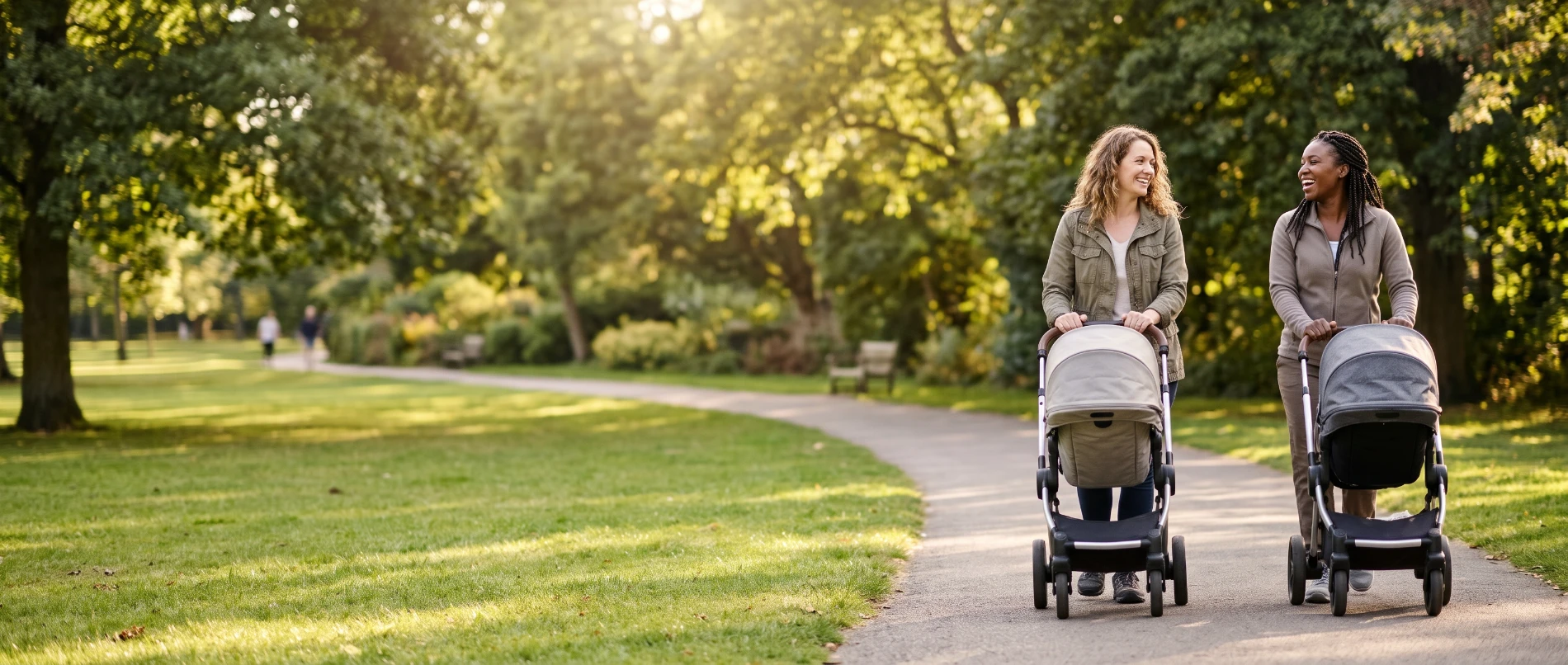
A smiling woman walking in a park pushing a pram with a baby

Get-fit guides / Exercise after having a baby

Exercise after having a baby

By the Exercise Explorer team. Last updated 13 November 2026.

After birth, gentle movement such as walking and pelvic floor exercises can start early for many women, with more demanding exercise added gradually. A 2026 pooled analysis found exercise reduced symptoms of postnatal depression. These are the options we rate well.

Read this first. Recovery varies, and it differs after a caesarean or a difficult birth. Check with your midwife, GP or a women’s health physiotherapist before returning to exercise, and at your postnatal check. This is general information, not medical advice.

The short answer

  • Many women can begin walking and gentle pelvic floor exercises soon after birth. Build up slowly, and ask about timing after a caesarean or tear.
  • A 2026 pooled analysis of 16 trials found exercise reduced symptoms of postnatal depression, with mind-body exercise showing the largest effect and programmes of 12 weeks or less working best.
  • Add strength work gradually. Wait for advice before returning to running, jumping or heavy lifting.
  • Heavy bleeding, pain, or a bulge or heaviness in the pelvis are signs to stop and get checked.

The best exercises after having a baby

Walking

Daily Walking

Steady walks built into the day; the easiest place to start.
30 min × 5/wkEffort ●○○○○Free
Mobility, rehab & life stages

Postnatal Recovery

Gradual return to activity after birth.

20 min × 3/wkEffort ●○○○○Low cost
Yoga, Pilates & mind-body

Hatha Yoga

Slow poses with breathing and stillness.

60 min × 2/wkEffort ●●○○○Low cost
Yoga, Pilates & mind-body

Pilates (Mat)

Core-focused precise floor exercises.

50 min × 2/wkEffort ●●○○○Low cost
Strength & resistance

Resistance Band Training

Full-body workouts with elastic bands.

30 min × 3/wkEffort ●●○○○Low cost
Swimming & water

Lap Swimming

Pool lengths using one or more strokes.

40 min × 3/wkEffort ●●●○○Low cost
Mobility, rehab & life stages

Pelvic Floor Exercises

Controlled contractions for pelvic floor strength.

5 min × 5/wkEffort ●○○○○Free
Gym machines & classes

Stationary Bike

Seated cycling at the gym or at home.

30 min × 3/wkEffort ●●○○○Low cost

How each one helps

Evidence at a glance How much good research supports each option

StrongModerateLimited

  1. 1
    Daily WalkingStrong evidence

    With the pram, a sling or on your own. Start short and build up.

    30 min × 5/wkEffort ●○○○○Free
  2. 2
    Postnatal RecoveryModerate evidence

    A gradual return to exercise, from pelvic floor and walking to strength.

    20 min × 3/wkEffort ●○○○○Low cost
  3. 3
    Hatha YogaModerate evidence

    Gentle stretching and breathing. Mind-body exercise showed the largest effect on postnatal depression in the 2026 analysis.

    60 min × 2/wkEffort ●●○○○Low cost
  4. 4
    Pilates (Mat)Moderate evidence

    Gentle core and pelvic floor control. Use a postnatal class.

    50 min × 2/wkEffort ●●○○○Low cost
  5. 5
    Resistance Band TrainingModerate evidence

    Light strength work for carrying and lifting a baby.

    30 min × 3/wkEffort ●●○○○Low cost
  6. 6
    Lap SwimmingModerate evidence

    Gentle on the body. Wait until any bleeding has stopped, and a few weeks after stitches or a caesarean, as advised.

    40 min × 3/wkEffort ●●●○○Low cost
  7. 7
    Pelvic Floor ExercisesLimited evidence

    Commonly advised after birth. A women’s health physiotherapist can check your technique.

    5 min × 5/wkEffort ●○○○○Free
  8. 8
    Stationary BikeLimited evidence

    Low impact. Padded shorts or a gel seat can help.

    30 min × 3/wkEffort ●●○○○Low cost

Find my exercise Browse all

What to avoid or go slowly with

  • Running, jumping and high-impact exercise before you have been checked, especially if you notice leaking or heaviness in the pelvis.
  • Heavy lifting and intense core exercises such as sit-ups, if your abdominal muscles have separated, until you have advice.
  • Doing too much too soon. Broken sleep makes recovery slower.
  • Pushing through pain, or ignoring heavy bleeding.
  • Exercising when very tired. Rest counts too.

How to ease back into exercise after a baby: a gentle first week

This is an example to adapt, not a prescription. If a day feels too much, do less.

  1. Day1A 5 to 10-minute gentle walk, with pelvic floor squeezes.Walking
  2. Day2Rest, with pelvic floor exercises.Rest day
  3. Day3A 10-minute walk.Walking
  4. Day45 to 10 minutes of gentle stretching.Yoga and floor exercises
  1. Day5A 10 to 15-minute walk.Walking
  2. Day6Rest.Rest day
  3. Day7A gentle walk with the baby. If the week felt fine, add a few minutes next week.Walking
  4. My notes: how did you feel, including sleep and mood?

When to see a doctor

Stop exercising and get medical advice if any of these apply to you.

Get urgent help now

  • Heavy bleeding that soaks through a pad in an hour, or large clots
  • Chest pain, severe breathlessness, or collapse
  • Painful, swollen calf, or fever with pain, redness or discharge from a wound
  • Thoughts of harming yourself or your baby

Call 999 or go to A&E. Do not wait for a GP appointment.

Speak to a GP or call NHS 111 if you have

  • Bleeding that gets heavier or returns after exercise.
  • A bulge or feeling of heaviness in the vagina or pelvis, or leaking urine that does not improve.
  • Pain in your wound, abdomen, back or pelvis that is worsening.
  • Low mood, anxiety or feeling overwhelmed that lasts more than two weeks.

What the research says

A 2026 pooled analysis of 16 trials found that exercise reduced symptoms of postnatal depression (standardised difference -0.69), with mind-body exercise showing the largest effect and programmes of 12 weeks or less working best.

The WHO 2020 guidelines recommend that postpartum women without contraindications do at least 150 minutes of moderate activity a week, and include muscle-strengthening.

We found no trials we had read in full on pelvic floor exercise, walking or Pilates after birth, so these are included because they are commonly recommended and low risk.

Exercise is one part of care for postnatal depression and does not replace professional help.

Full references are listed under Sources below. Evidence ratings are our own plain-English summary of the research we found, not a medical opinion.

Frequently asked questions

When can I start exercising after having a baby?

Many women can begin gentle walking and pelvic floor exercises soon after birth, but timing varies, especially after a caesarean or a tear. Ask your midwife or GP.

What exercise is best after having a baby?

Walking, pelvic floor exercises, gentle strength and mind-body exercise such as yoga or Pilates are common choices.

Can exercise help postnatal depression?

A 2026 pooled analysis of 16 trials found exercise reduced symptoms, but it is not a replacement for support. If you are struggling, tell your GP or health visitor.

When can I start running again?

Many sources suggest waiting until at least a few months after birth and having a check first. A women’s health physiotherapist can assess your readiness.

Is it OK to do sit-ups after having a baby?

Intense core exercises such as sit-ups can strain separated abdominal muscles, so build up with gentler core work and ask for advice.

How do I do pelvic floor exercises?

Squeeze and lift the muscles you would use to stop passing wind or urine, hold for a few seconds, and release. A physiotherapist can check your technique.

When should I see a doctor?

Get urgent help for heavy bleeding, chest pain, severe breathlessness, or thoughts of harm. See a GP for pelvic heaviness, worsening pain, or low mood lasting more than two weeks.

Sources

  1. Which exercise strategies improve postpartum depression? A systematic review and meta-analysis of randomized controlled trials. Frontiers in Public Health, 2026. doi.org/10.3389/fpubh.2026.1876038
  2. World Health Organization 2020 guidelines on physical activity and sedentary behaviour. British Journal of Sports Medicine, 2020. doi.org/10.1136/bjsports-2020-102955

Related guides