ExerciseExplorer
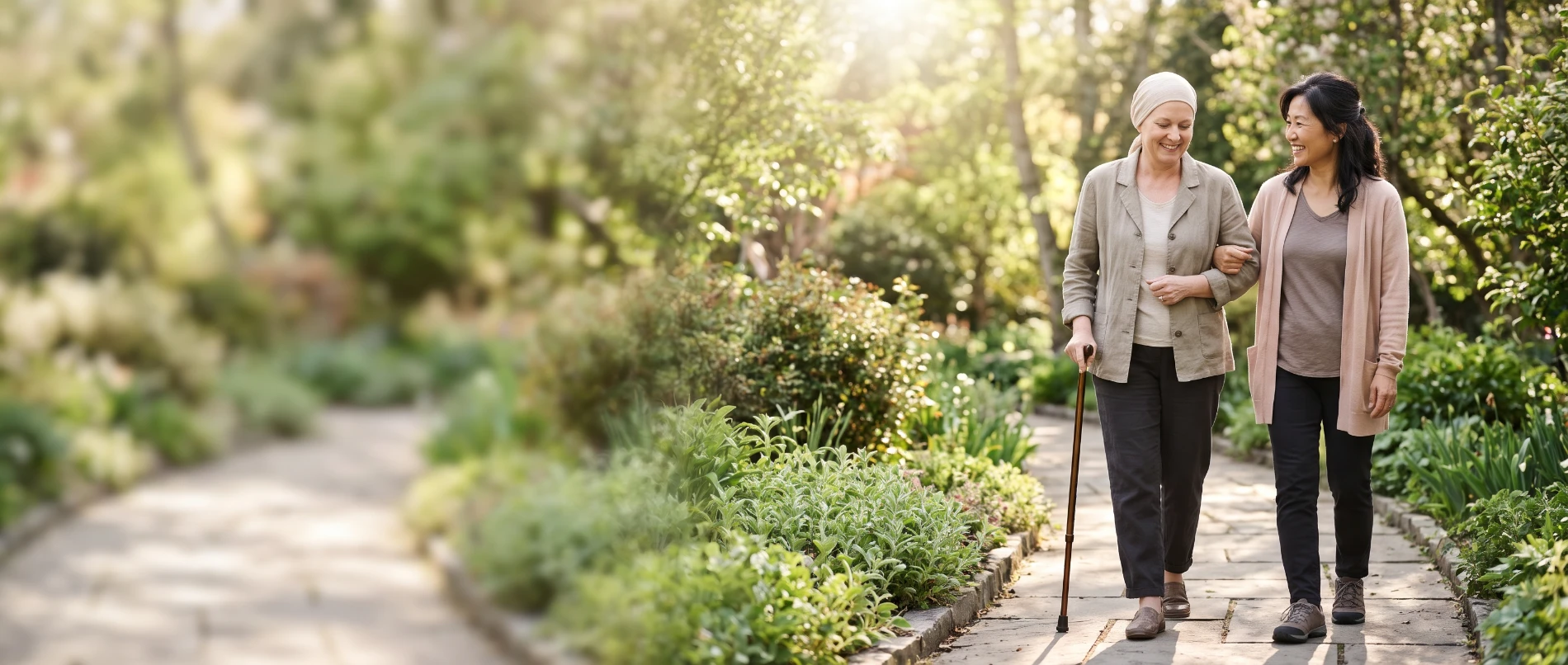
A smiling woman in a headscarf walking slowly with a friend along a sunny garden path

Get-fit guides / Exercise and cancer treatment

Exercise during and after cancer treatment

By the Exercise Explorer team. Last updated 13 November 2026.

Cancer treatment can leave you tired, weak and short of confidence. Reviews of many trials suggest that exercise can reduce cancer-related fatigue and improve quality of life and physical function, with small to moderate effects. The right type and amount depend on your treatment, so talk to your care team first.

Read this first. Please speak to your oncology team, specialist nurse or a cancer exercise specialist before starting or changing exercise, particularly during treatment, if you have bone metastases, low blood counts, a central line, lymphoedema or recent surgery. This is general information, not medical advice.

The short answer

  • A 2017 review of 245 studies found that several kinds of exercise, including aerobic, resistance, combined training, yoga and tai chi, reduced cancer-related fatigue during or after treatment, with small to moderate effects.
  • A pooled analysis of 34 trials (4,519 people) found that exercise improved quality of life and physical function, with small effects that were larger for supervised programmes.
  • Start low and go slowly, and rest when you need to. On hard days, any movement counts.
  • Supervised programmes, for example through a cancer rehab service, can be safer and more effective.

Gentle exercise during and after cancer treatment

Walking

Daily Walking

Steady walks built into the day; the easiest place to start.
30 min × 5/wkEffort ●○○○○Free
Strength & resistance

Resistance Band Training

Full-body workouts with elastic bands.

30 min × 3/wkEffort ●●○○○Low cost
Yoga, Pilates & mind-body

Hatha Yoga

Slow poses with breathing and stillness.

60 min × 2/wkEffort ●●○○○Low cost
Yoga, Pilates & mind-body

Tai Chi

Slow, flowing movements for balance and calm.

45 min × 3/wkEffort ●○○○○Low cost
Swimming & water

Lap Swimming

Pool lengths using one or more strokes.

40 min × 3/wkEffort ●●●○○Low cost
Gym machines & classes

Stationary Bike

Seated cycling at the gym or at home.

30 min × 3/wkEffort ●●○○○Low cost
Mobility, rehab & life stages

Chair Exercises

Seated exercises for strength and circulation.

20 min × 4/wkEffort ●○○○○Free

How each one helps

Evidence at a glance How much good research supports each option

StrongModerateLimited

  1. 1
    Daily WalkingStrong evidence

    The most accessible activity. Short walks, building up as you are able.

    30 min × 5/wkEffort ●○○○○Free
  2. 2
    Resistance Band TrainingModerate evidence

    Light strength work to counter muscle loss. Resistance training reduced fatigue in the 2017 review.

    30 min × 3/wkEffort ●●○○○Low cost
  3. 3
    Hatha YogaModerate evidence

    Gentle yoga showed the largest fatigue effect after treatment in the 2017 review. Choose a gentle class and tell the teacher.

    60 min × 2/wkEffort ●●○○○Low cost
  4. 4
    Tai ChiModerate evidence

    Tai chi also reduced fatigue after treatment in the 2017 review.

    45 min × 3/wkEffort ●○○○○Low cost
  5. 5
    Lap SwimmingModerate evidence

    Check first about swimming during treatment, particularly with a central line, radiotherapy skin or infection risk.

    40 min × 3/wkEffort ●●●○○Low cost
  6. 6
    Stationary BikeLimited evidence

    Low impact and easy to keep gentle.

    30 min × 3/wkEffort ●●○○○Low cost
  7. 7
    Chair ExercisesLimited evidence

    Seated options for tired days.

    20 min × 4/wkEffort ●○○○○Free

Find my exercise Browse all

What to avoid or go slowly with

  • Exercising when you feel unwell, feverish, or have a low blood count. Ask your team what thresholds apply.
  • Heavy impact or loaded exercise if you have bone metastases or osteoporosis from treatment, unless advised.
  • Swimming pools if your team has advised against it, for example with a central line or infection risk.
  • Pushing through severe fatigue. Rest is part of recovery.
  • Comparing yourself with who you were before treatment.

How to start gently: a first week

This is an example to adapt, not a prescription. If a day feels too much, do less.

  1. Day1A 5 to 10-minute gentle walk.Walking
  2. Day2Rest, or 5 minutes of gentle stretching.Rest day
  3. Day3A 10-minute walk.Walking
  4. Day4Rest.Rest day
  1. Day55 to 10 minutes of light band exercises, seated if you prefer.Yoga and floor exercises
  2. Day6A gentle walk, or chair yoga.Walking
  3. Day7Rest. Add a few minutes only if the week felt manageable.Rest day
  4. My notes: how did your energy feel afterwards?

When to see a doctor

Stop exercising and get medical advice if any of these apply to you.

Get urgent help now

  • Chest pain, severe breathlessness, or fainting
  • A temperature of 37.5°C or higher, or you feel shivery and unwell, during chemotherapy (call your emergency number for your treatment centre)
  • Sudden severe pain in a bone, or new weakness in the legs

Call 999 or go to A&E. Do not wait for a GP appointment.

Speak to a GP or call NHS 111 if you have

  • New or worsening swelling in an arm or leg.
  • Unusual bruising, bleeding or breathlessness.
  • Dizziness, palpitations or nausea during exercise.
  • Pain that is new, persistent or worsens with activity.

What the research says

A 2017 systematic review incorporating an indirect-comparisons meta-analysis of 245 randomised studies found that, during cancer treatment, relaxation exercise, combined aerobic and resistance training, resistance training, aerobic exercise and yoga all had moderate-to-large effects on cancer-related fatigue compared with usual care. After treatment, yoga showed the highest effect, followed by combined aerobic and resistance training, tai chi, resistance training and aerobic exercise (small-to-moderate effects). The authors concluded that patients can choose among different effective types.

A 2017 individual patient data meta-analysis of 34 randomised trials (4,519 people with cancer) found that exercise significantly improved quality of life and physical function. The effects were small, were not moderated by demographic, clinical or exercise characteristics, and were larger for supervised than unsupervised programmes.

These findings are averages. They do not tell you what is safe for your type of cancer and treatment, which is why individual advice matters.

Full references are listed under Sources below. Evidence ratings are our own plain-English summary of the research we found, not a medical opinion.

Frequently asked questions

Is it safe to exercise during cancer treatment?

For many people, appropriately tailored exercise is considered safe and helpful, but it depends on your cancer, treatment and health. Check with your oncology team first.

Can exercise reduce cancer-related fatigue?

A 2017 review of 245 studies found that several types of exercise reduced cancer-related fatigue during and after treatment, with small to moderate effects.

What type of exercise is best?

Reviews suggest aerobic, resistance, combined training, yoga and tai chi can all help. The best one is the one that suits your treatment and that you enjoy.

Is supervised exercise better?

An analysis of 34 trials found that supervised programmes had larger effects on quality of life and physical function than unsupervised ones.

How much exercise should I do?

Start small. Many programmes build gradually towards the general guideline, but this depends on your treatment and how you feel.

Can I exercise if I am very tired?

Gentle movement can help fatigue, but listen to your body. On very tired days, rest or do something very light.

When should I check with my care team?

Before starting, and if you have fever, new swelling, bone pain, unusual bruising or breathlessness, or any symptom that worries you.

Sources

  1. Exercise and other non-pharmaceutical interventions for cancer-related fatigue in patients during or after cancer treatment: a systematic review incorporating an indirect-comparisons meta-analysis. British Journal of Sports Medicine, 2017. doi.org/10.1136/bjsports-2016-096422
  2. Effects and moderators of exercise on quality of life and physical function in patients with cancer: An individual patient data meta-analysis of 34 RCTs. Cancer Treatment Reviews, 2017. doi.org/10.1016/j.ctrv.2016.11.010

Related guides