ExerciseExplorer
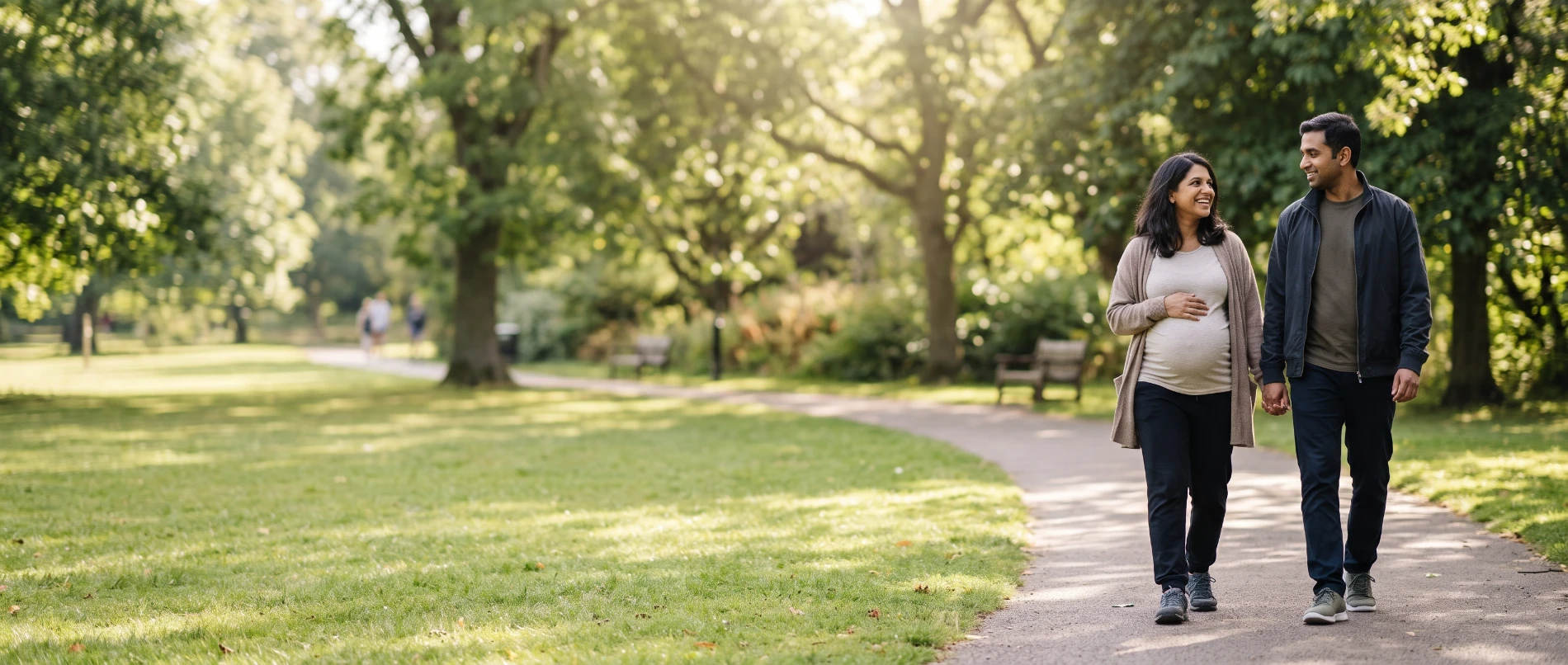
A smiling pregnant woman walking in a sunny park, relaxed and upright

Get-fit guides / Exercise during pregnancy

Exercise during pregnancy

By the Exercise Explorer team. Last updated 13 November 2026.

For most healthy pregnancies, regular moderate exercise is encouraged, and a 2026 pooled analysis of supervised programmes linked it to lower risks of gestational diabetes and high blood pressure in pregnancy. These are the options we rate well, and the signs to stop.

Read this first. Every pregnancy is different. Before you start or continue exercise, check with your midwife or doctor, particularly if you have a complication, bleeding, high blood pressure, or have had a previous late miscarriage or early labour. This is general information, not medical advice.

The short answer

  • A 2026 pooled analysis of 19 trials (6,213 pregnant women) found that supervised exercise lowered the risk of gestational diabetes, high blood pressure in pregnancy and excessive weight gain. The certainty was moderate.
  • Walking, swimming, water exercise, gentle yoga and light strength work are common, low-risk choices.
  • Aim for effort at which you can still talk. Stay cool and drink plenty of water.
  • Stop and get advice if you have bleeding, dizziness, chest pain, leaking fluid, or reduced baby movements.

The best exercises during pregnancy

Walking

Daily Walking

Steady walks built into the day; the easiest place to start.
30 min × 5/wkEffort ●○○○○Free
Mobility, rehab & life stages

Pregnancy Exercise

Gentle, adapted strength and cardio for pregnancy.

30 min × 3/wkEffort ●●○○○Low cost
Swimming & water

Lap Swimming

Pool lengths using one or more strokes.

40 min × 3/wkEffort ●●●○○Low cost
Swimming & water

Aqua Aerobics

Group exercise to music in a pool.

45 min × 2/wkEffort ●●○○○Low cost
Yoga, Pilates & mind-body

Hatha Yoga

Slow poses with breathing and stillness.

60 min × 2/wkEffort ●●○○○Low cost
Yoga, Pilates & mind-body

Pilates (Mat)

Core-focused precise floor exercises.

50 min × 2/wkEffort ●●○○○Low cost
Strength & resistance

Resistance Band Training

Full-body workouts with elastic bands.

30 min × 3/wkEffort ●●○○○Low cost
Gym machines & classes

Stationary Bike

Seated cycling at the gym or at home.

30 min × 3/wkEffort ●●○○○Low cost
Mobility, rehab & life stages

Pelvic Floor Exercises

Controlled contractions for pelvic floor strength.

5 min × 5/wkEffort ●○○○○Free

How each one helps

Evidence at a glance How much good research supports each option

StrongModerateLimited

  1. 1
    Daily WalkingStrong evidence

    The simplest option, easy to adjust as your pregnancy goes on.

    30 min × 5/wkEffort ●○○○○Free
  2. 2
    Pregnancy ExerciseModerate evidence

    The overall approach: regular, moderate exercise combining aerobic and strength work, started early if possible.

    30 min × 3/wkEffort ●●○○○Low cost
  3. 3
    Lap SwimmingModerate evidence

    Water supports your weight and helps you stay cool.

    40 min × 3/wkEffort ●●●○○Low cost
  4. 4
    Aqua AerobicsModerate evidence

    Gentle, supported movement. Many pools run pregnancy classes.

    45 min × 2/wkEffort ●●○○○Low cost
  5. 5
    Hatha YogaModerate evidence

    Choose a pregnancy or gentle class. Avoid lying flat on your back for long and deep twists.

    60 min × 2/wkEffort ●●○○○Low cost
  6. 6
    Pilates (Mat)Moderate evidence

    Core and pelvic-floor awareness. Use a pregnancy class or adapt to avoid lying flat on your back.

    50 min × 2/wkEffort ●●○○○Low cost
  7. 7
    Resistance Band TrainingModerate evidence

    Light strength work. Keep breathing steadily and avoid straining.

    30 min × 3/wkEffort ●●○○○Low cost
  8. 8
    Stationary BikeLimited evidence

    A stable option as balance changes. Adjust the position as your bump grows.

    30 min × 3/wkEffort ●●○○○Low cost
  9. 9
    Pelvic Floor ExercisesLimited evidence

    Often recommended in pregnancy. A midwife or physiotherapist can show you how.

    5 min × 5/wkEffort ●○○○○Free

Find my exercise Browse all

What to avoid or go slowly with

  • Contact sports and activities with a high risk of falls or blows to the abdomen, such as horse riding, skiing and some ball sports.
  • Lying flat on your back for long periods later in pregnancy. Use a raised position or a side-lying alternative.
  • Exercising in very hot or humid conditions, including hot yoga, and getting overheated.
  • Scuba diving, and activity at high altitude if you are not used to it.
  • Holding your breath or heavy straining.
  • Exercise to exhaustion. Keep to a level where you can still hold a conversation.

How to stay active in pregnancy: a gentle first week

This is an example to adapt, not a prescription. If a day feels too much, do less.

  1. Day1A 10 to 15-minute walk.Walking
  2. Day210 minutes of gentle stretching or pregnancy yoga.Yoga and floor exercises
  3. Day3A 15-minute walk, or water walking.Swimming or water walking
  4. Day4Rest.Rest day
  1. Day510 minutes of light resistance band work and pelvic floor exercises.Yoga and floor exercises
  2. Day6A gentle swim, or a 20-minute walk.Swimming or water walking
  3. Day7Rest. If the week felt fine, add a few minutes next week.Rest day
  4. My notes: how did you feel, and how was baby moving?

When to see a doctor

Stop exercising and get medical advice if any of these apply to you.

Get urgent help now

  • Vaginal bleeding, or fluid leaking from the vagina
  • Chest pain, severe breathlessness, or fainting
  • Regular painful contractions, or reduced movements of your baby
  • Severe headache, visual disturbance, or sudden swelling of the face and hands

Call 999 or go to A&E. Do not wait for a GP appointment.

Speak to a GP or call NHS 111 if you have

  • Dizziness or feeling faint that does not settle with rest.
  • Calf pain or swelling in one leg.
  • Pelvic or back pain that gets worse with activity.
  • Any concern about your baby, or anything that does not feel right.

What the research says

A 2026 pooled analysis of 19 trials (6,213 pregnant women, moderate-certainty evidence) found that supervised exercise lowered the risk of gestational diabetes (by about 26%), high blood pressure in pregnancy (about 45%), excessive weight gain (about 25%) and large babies (about 39%), with greater effects when it started early and combined aerobic and resistance training.

These were supervised programmes in selected groups of women, so the results may not apply to everyone.

The WHO 2020 guidelines recommend that pregnant and postpartum women without contraindications do at least 150 minutes of moderate activity a week. We found no trials of individual activities such as swimming or yoga that we had read in full, so they are included because they are commonly recommended and low risk.

Full references are listed under Sources below. Evidence ratings are our own plain-English summary of the research we found, not a medical opinion.

Frequently asked questions

Is it safe to exercise during pregnancy?

For most healthy pregnancies, yes. Moderate exercise is encouraged, but check with your midwife or doctor first, particularly if you have complications.

What is the best exercise during pregnancy?

Walking, swimming, water exercise, gentle yoga and light strength work are common choices. The best one is the one you enjoy and can keep up.

How hard should I exercise when pregnant?

A common rule is a level at which you can still hold a conversation. Stop if you feel unwell.

Can exercise help prevent gestational diabetes?

A 2026 pooled analysis of 19 trials found that supervised exercise lowered the risk of gestational diabetes by about 26%. This does not guarantee any individual outcome.

Can I start exercising when pregnant?

Yes, if you have been cleared by your midwife or doctor. Start gently and build up.

Can I lift weights when pregnant?

Light to moderate strength work is generally considered fine for healthy pregnancies. Use good form, avoid straining and holding your breath, and ask your midwife.

When should I stop exercising and seek help?

Stop and seek urgent advice for bleeding, leaking fluid, chest pain, severe breathlessness, regular contractions, or reduced baby movements.

Sources

  1. Effects of supervised exercise during pregnancy on gestational diabetes mellitus and other pregnancy outcomes: a systematic review and meta-analysis. British Journal of Sports Medicine, 2026. doi.org/10.1136/bjsports-2026-111586
  2. World Health Organization 2020 guidelines on physical activity and sedentary behaviour. British Journal of Sports Medicine, 2020. doi.org/10.1136/bjsports-2020-102955

Related guides