Daily Walking
Steady walks built into the day; the easiest place to start.
Get-fit guides / Best exercise for stress
By the Exercise Explorer team. Last updated 13 November 2026.
Exercise is one of the most commonly recommended ways to manage stress and anxiety. Pooled analyses of trials suggest it reduces anxiety with a small to moderate effect. These are the options we rate well, and a reminder that exercise sits alongside, not instead of, other support.
Read this first. If stress or anxiety is overwhelming, or you have thoughts of harming yourself, please speak to your GP, call NHS 111, or call Samaritans on 116 123. This is general information, not medical advice.
Steady walks built into the day; the easiest place to start.
Longer walks over hills and trails.
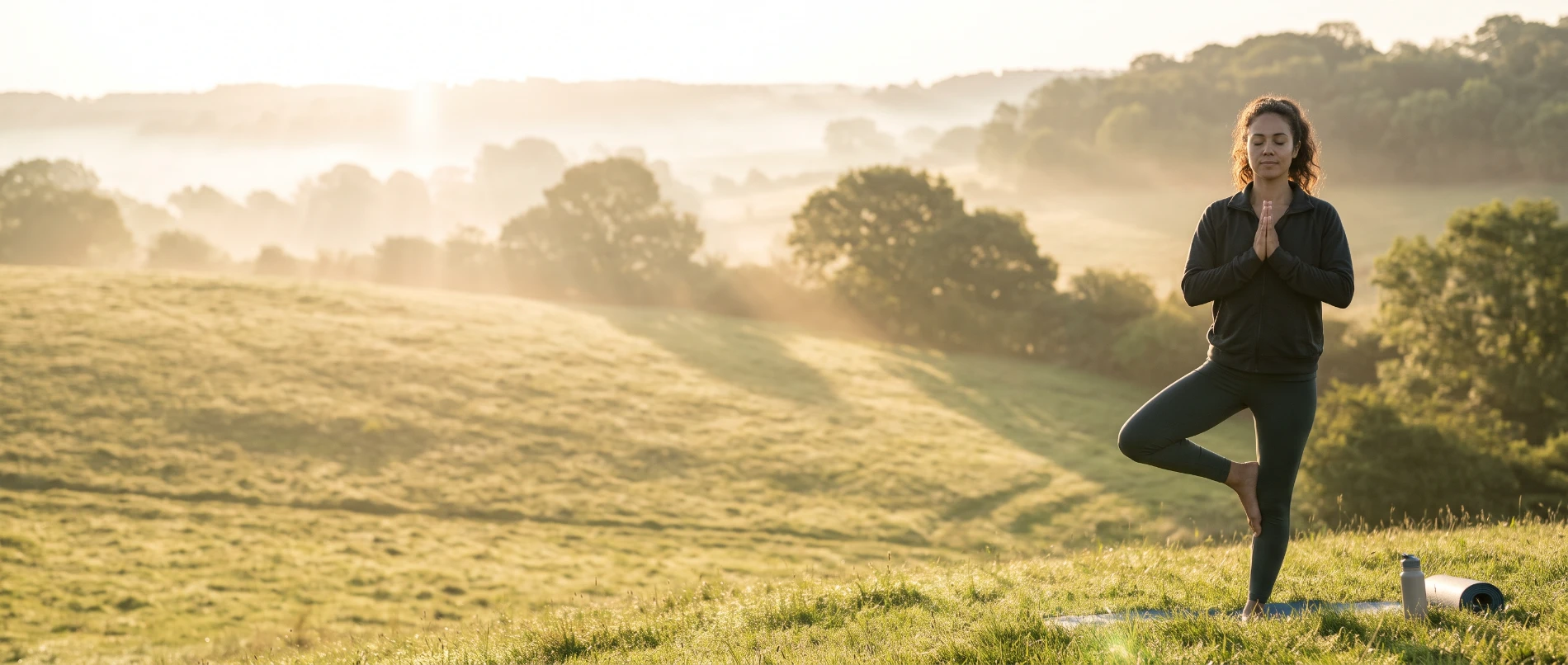
Slow poses with breathing and stillness.
Slow, flowing movements for balance and calm.
Pool lengths using one or more strokes.
Seated cycling at the gym or at home.
Daily walks driven by a dog's needs.
Free weekly timed 5 km run or walk in local parks.
Evidence at a glance How much good research supports each option
StrongModerateLimited
Short walks, ideally outside, are the simplest option.
Time in nature plus exercise.
Poses and breathing that many people find calming.
A 2026 review found tai chi evidence consistent for low mood, sleep and balance. Specific anxiety evidence was less clear.
Rhythmic and absorbing for many people.
A steady, repetitive activity that can clear your head.
This is an example to adapt, not a prescription. If a day feels too much, do less.
Stop exercising and get medical advice if any of these apply to you.
Call 999 or go to A&E. Do not wait for a GP appointment.
A 2015 meta-meta-analysis of eight meta-analyses of randomised trials in non-clinical adult populations found that physical activity reduced depression by a medium effect (standardised difference -0.50) and anxiety by a small effect (-0.38), based on 92 studies for depression and 306 effects for anxiety.
A 2017 meta-analysis of six randomised trials (262 adults with anxiety and stress-related disorders) found that exercise decreased anxiety symptoms more than control conditions, with a moderate effect (-0.58). The number of trials was small, and the authors noted the literature in this area is equivocal.
A 2026 review of 171 publications found that evidence for tai chi was most consistent for reducing depressive symptoms, improving sleep and improving balance.
These reviews pool many types of exercise, so they cannot tell you which one is best for you.
Full references are listed under Sources below. Evidence ratings are our own plain-English summary of the research we found, not a medical opinion.
There is no proven single best one. Reviews pool many kinds of exercise and find benefits for anxiety. Choose something you enjoy and can do regularly.
A 2015 meta-meta-analysis found a small effect in non-clinical adults, and a 2017 analysis of six trials found a moderate effect in people with anxiety disorders.
There is no fixed amount. Regular sessions through the week, even short ones, are a good start.
Walking is a good option, particularly outdoors. Add what you enjoy, such as yoga, swimming or classes.
No. It can support treatment, but do not stop medication or therapy without speaking to your clinician.
Start tiny: five minutes outside. Gentle movement and breathing can be easier than intense exercise.
See a GP if stress or anxiety lasts more than a couple of weeks or affects daily life. If you have thoughts of harming yourself, call 999, NHS 111 or Samaritans on 116 123.