Featured in: Exercise with high blood pressure, Exercise for depression and anxiety, Free exercise, Best exercise for strong bones, Best exercise for stress
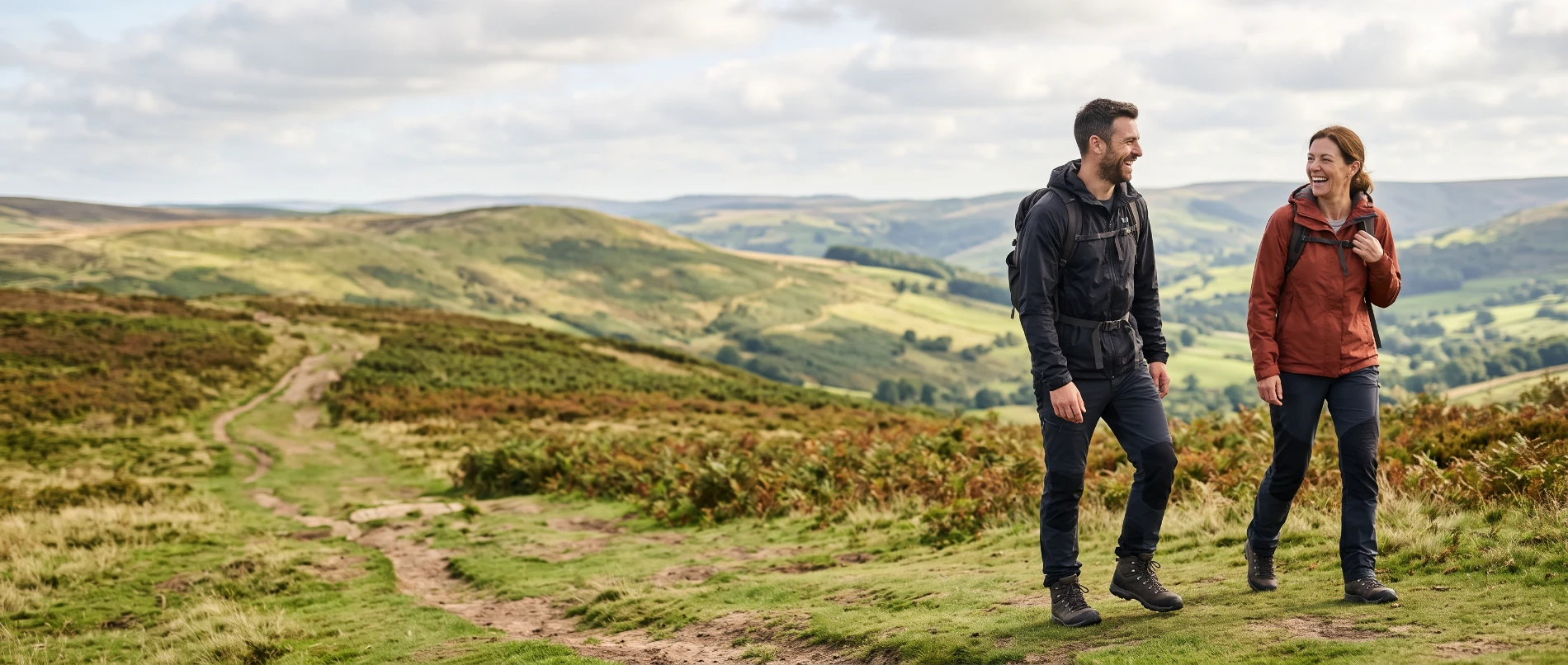
Hill Walking and Hiking
Longer walks over hills and trails.
How to start
Begin with short, well-marked routes of 1-2 hours on good paths.
How to progress
Add distance and height gain gradually; practise with a small pack.
What the evidence says
Evidence: moderate
No review specific to hiking found. A 2015 BJSM meta-analysis of 42 outdoor walking-group studies (1,843 people) found lower blood pressure (about 3.7/3.1 mmHg), better fitness and fewer depressive symptoms, with no notable adverse effects. This is indirect evidence for hiking.
Take care: Weather, navigation and footing risks. Carry water, a map and a charged phone, and tell someone your route.
Sources
12-week starter plan
You need a comfortable base of 30-minute walks first. Add a longer hill walk each weekend and keep a shorter walk in the week.
Tick each week as you finish it; your ticks are saved on this device only. Repeat a week if it felt hard. Weeks 4, 8 and 12 hold steady so you can settle. This is a general plan, not medical advice.
Add reminders to your calendar
Pick your days and time. You will download a calendar file that adds 12 weeks of reminders to Google, Apple or Outlook calendar.
Calories and weekly minutes
Enter your details for a rough estimate. Based on about 6 METs (Hiking on hills with a light pack). Real figures vary by 20% or more between people.
Tips and common mistakes
Tips
- Pace yourself uphill: slow enough to keep breathing steadily.
- Pack water, snacks, a waterproof layer and a map or navigation app.
- Tell someone your route and when you expect to be back.
Common mistakes
- Underestimating the weather and the time.
- Wearing trainers on rough or wet ground.
- Starting too late in the day to finish in daylight.
Kit and cost
Low to moderate Approximate UK prices.
- Walking boots or sturdy shoes (about £60 to £150)
- A waterproof jacket
- A daypack, water, map or phone with a navigation app
- Optional: walking poles
Frequently asked questions
How fit do I need to be for hill walking?
You should be comfortable walking briskly for 30 minutes. Start on gentle hills and short routes, then build to bigger ones.
How do I stay safe on a hike?
Check the weather, carry water and a map, wear sensible footwear and tell someone your plan. Turn back if conditions worsen.
Is hiking good exercise?
Yes. Walking uphill raises your heart rate and works the legs, and time outdoors is good for mood. A review of walking groups found lower blood pressure and better fitness.
Is hiking hard on the knees?
Going downhill puts extra load on the knees. Shorter steps, poles and a slower descent help. See a physiotherapist if you have knee pain.
Good for: Heart & fitness Endurance Mood & stress Fun & social
Compare with similar options
| Hill Walking and Hiking | Rucking | Stair Climbing | Brisk Walking | |
|---|---|---|---|---|
| Typical session | 90 min × 1/wk | 45 min × 2/wk | 15 min × 3/wk | 30 min × 5/wk |
| Effort | ●●●○○ | ●●●○○ | ●●●○○ | ●●○○○ |
| Cost | Low cost | Low cost | Free | Free |
| Equipment | Basic kit | Basic kit | No equipment | No equipment |
| Impact | Low impact | Medium impact | Medium impact | Low impact |
| Fitness needed | Moderate fitness | Moderate fitness | Some fitness | Some fitness |
| Evidence | moderate | limited | limited | strong |