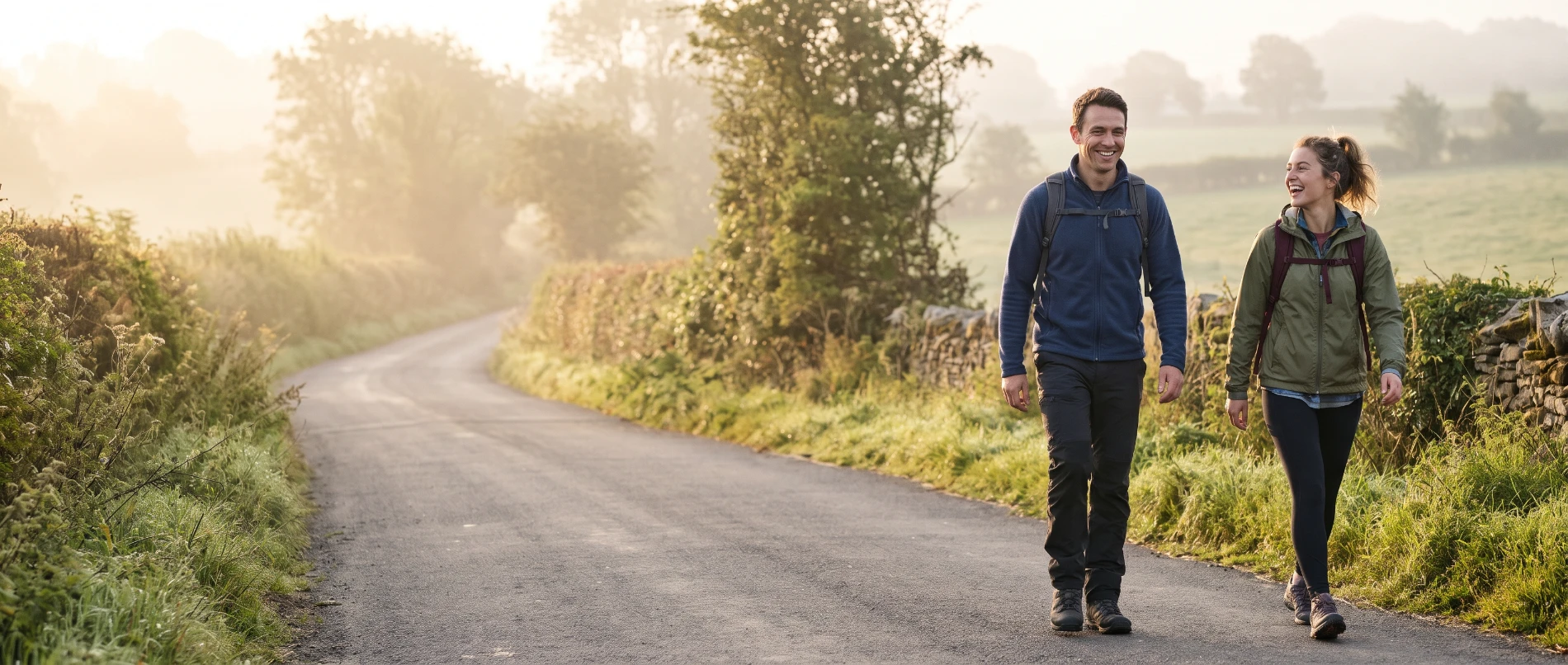
Rucking
Walking with a weighted backpack.
How to start
Start with a light pack, about 5-10% of body weight, on flat routes for 30 minutes.
How to progress
Add load or distance, not both at once; stay well under about a third of body weight.
What the evidence says
Evidence: limited
Extra load raises the energy cost of walking, but most online claims come from commercial sources. A 2022 Gait & Posture review on weighted-vest walking exists but its findings were not read.
Take care: Overuse injury is the main risk. Avoid heavy loads with back problems, knee osteoarthritis or a recent lower-leg stress injury, and ask a clinician first.
12-week starter plan
Start light and add load slowly. Add either more weight or more time in a week, not both at once.
Tick each week as you finish it; your ticks are saved on this device only. Repeat a week if it felt hard. Weeks 4, 8 and 12 hold steady so you can settle. This is a general plan, not medical advice.
Add reminders to your calendar
Pick your days and time. You will download a calendar file that adds 12 weeks of reminders to Google, Apple or Outlook calendar.
Calories and weekly minutes
Enter your details for a rough estimate. Based on about 7 METs (Walking with a weighted pack). Real figures vary by 20% or more between people.
Tips and common mistakes
Tips
- Pack the heavy items high and close to your back.
- Use a pack with a waist strap and chest strap.
- Walk on flat ground to begin with.
Common mistakes
- Adding too much weight too soon: overuse injuries are the main risk.
- Carrying the load low, which pulls on the lower back.
- Ignoring pain in the feet, knees or back.
Kit and cost
Low to moderate Approximate UK prices.
- A comfortable backpack with waist and chest straps (about £30 to £100)
- Weight such as water bottles, books or a purpose-made plate (about £0 to £40)
- Supportive shoes or boots
Frequently asked questions
What is rucking?
Rucking is walking with a weighted backpack. It comes from military training but is now used as a simple fitness workout.
How much weight should I carry?
A common starting point is about 5 to 10% of your body weight, building up slowly. Practitioners advise staying well under about a third.
Is rucking better than walking?
Carrying load makes walking use more energy, so it is harder on the same route. Evidence specific to rucking is limited, so treat the claims with caution.
Who should avoid rucking?
People with back problems, significant knee arthritis or a recent lower-leg injury should ask a clinician first. It is also not suited to pregnancy.
Good for: Heart & fitness Strength Weight loss Endurance
Compare with similar options
| Rucking | Hill Walking and Hiking | Stair Climbing | Nordic Walking | |
|---|---|---|---|---|
| Typical session | 45 min × 2/wk | 90 min × 1/wk | 15 min × 3/wk | 45 min × 3/wk |
| Effort | ●●●○○ | ●●●○○ | ●●●○○ | ●●○○○ |
| Cost | Low cost | Low cost | Free | Low cost |
| Equipment | Basic kit | Basic kit | No equipment | Basic kit |
| Impact | Medium impact | Low impact | Medium impact | Low impact |
| Fitness needed | Moderate fitness | Moderate fitness | Some fitness | Some fitness |
| Evidence | limited | moderate | limited | moderate |