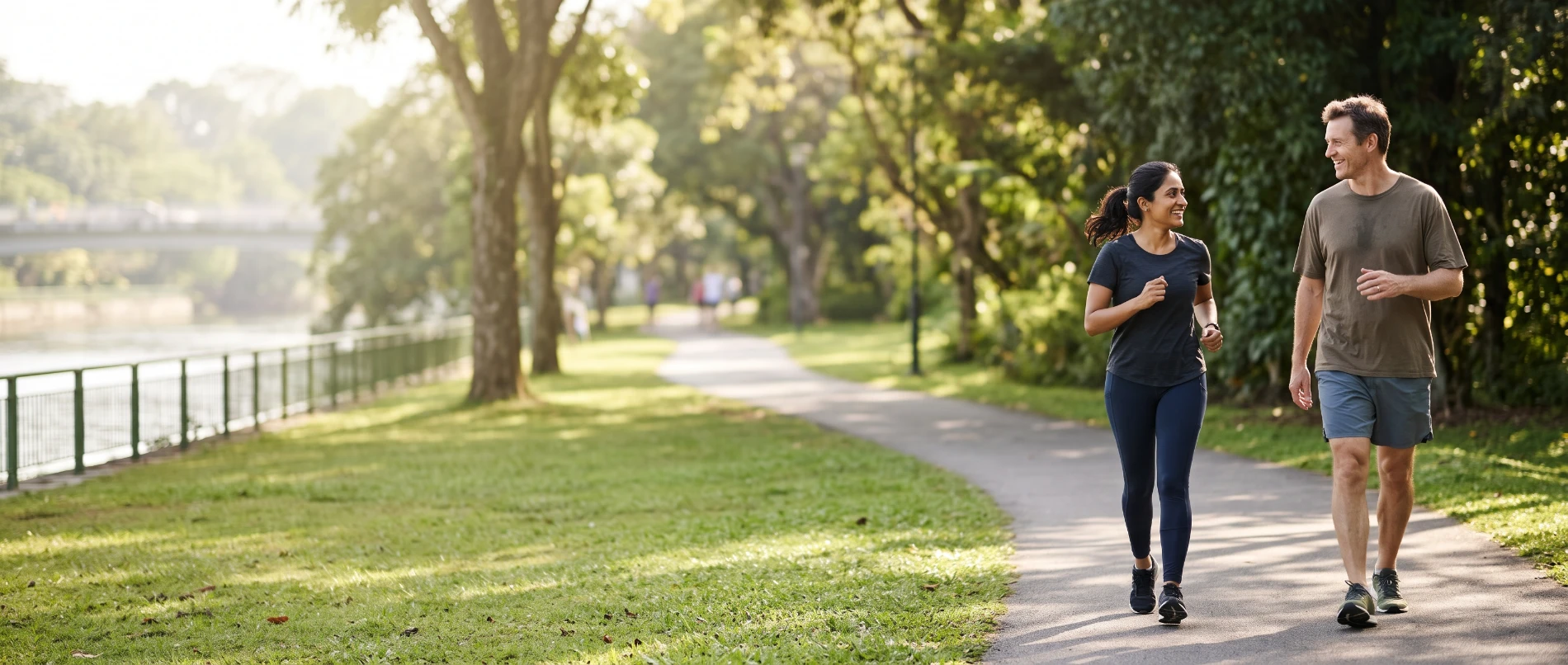
Brisk Walking
Pace that raises breathing but still allows talking.
Get-fit guides / Best exercise for weight loss
By the Exercise Explorer team. Last updated 13 November 2026.
Exercise helps with weight loss, though on its own the effect is modest, and weight also depends on eating, sleep and much else. A pooled analysis of 16 trials found moderate reductions in weight and a larger reduction in visceral fat. These are the options we rate well, and what to expect.
Read this first. This is general information, not medical advice. If you have a health condition, take medicines, or want to lose a lot of weight, speak to your GP or a registered dietitian. We did not review diet research for this page.
Pace that raises breathing but still allows talking.
Steady walks built into the day; the easiest place to start.
Pool lengths using one or more strokes.
Group exercise to music in a pool.
Full-body workouts with elastic bands.
Short maximal efforts alternated with rest.
Seated cycling at the gym or at home.
Gliding low-impact cardio.
Evidence at a glance How much good research supports each option
StrongModerateLimited
Easy to do often and for long. Moderate walking can fit the trial programmes.
Build up steadily. A step counter helps you track it.
Kind on joints. A 2026 analysis found small pain and function gains in people with overweight and knee or hip osteoarthritis.
Strength work helps keep muscle. Our reviewed analysis did not show it increased lean mass.
Short intense intervals. Demanding, so build up and check with your GP if you have health concerns.
Low impact. Good if joints are sore.
Low-impact gym cardio. We found no trials we had read in full.
This is an example to adapt, not a prescription. If a day feels too much, do less.
Stop exercising and get medical advice if any of these apply to you.
Call 999 or go to A&E. Do not wait for a GP appointment.
A 2021 systematic review and meta-analysis of 16 randomised trials found that exercise interventions in overweight and obese people reduced weight (effect size d = -0.58), BMI (d = -0.50) and accumulated visceral fat (d = -1.08), but did not significantly increase lean body mass. The average intervention was of moderate to vigorous intensity, 4 times a week, 50 minutes per session, over 22 weeks. The authors called for more research on different modalities and intensities.
The WHO 2020 guidelines recommend 150 to 300 minutes of moderate activity a week plus strength work on two days for general health, and note that more activity gives more benefit.
A 2026 pooled analysis of 12 trials (1,057 people with overweight or obesity and knee or hip osteoarthritis) found small improvements in pain and function with aquatic exercise (low certainty).
We did not review diet research, and effect sizes are not the same as kilograms lost, so individual results vary widely.
Full references are listed under Sources below. Evidence ratings are our own plain-English summary of the research we found, not a medical opinion.
Trials mostly pool moderate to vigorous aerobic exercise, done about four times a week for 50 minutes. We did not find reliable evidence that one type beats another, so choose what you can keep doing.
Exercise reduced weight with a moderate effect size in a 2021 analysis of 16 trials, but weight also depends on eating and other factors. Exercise brings health benefits even when weight changes little.
Brisk walking uses energy, is easy to keep up and is low impact. It can be a good base, alongside strength work.
We did not find reliable evidence in this review that it beats steady exercise for weight loss. It is time-efficient but demanding.
It helps with muscle and strength, but in the 2021 analysis exercise did not significantly increase lean mass. It still has other health benefits.
The trials averaged 22 weeks. Fitness often improves sooner than the scales.
See a GP for dizziness, palpitations or joint pain during exercise, unintended weight changes, or if you want to lose a large amount of weight.